


Chelen Johnson
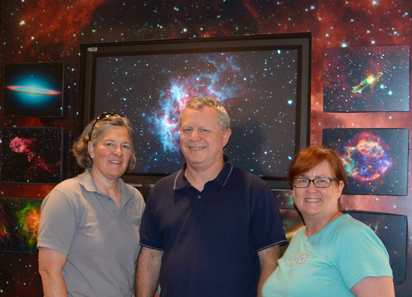

I think most people carry misconceptions of scientists as a whole... but I also think most people don't even personally know an astronomer or scientist. The fact that I know and have worked with scientists is going to be helpful to share with students.

[At the AAS,] All the talks I attended were truly interesting. It is pleasure to have others teach me!
I've attended many NSTA conference that focus on science education, but this purely scientific conference was an amazing opportunity. I gained a true appreciation for both the quantity and quality of research and work being conducted in the field of and astrophysics. [...]It made me feel like I was part of a community of learners with the same, or at least related interests. [...]


