• NASA
  • IPAC

AAS - 2012

The Winter American Astronomical Society (AAS) meeting is the largest meeting of professional astronomers in the world. NITARP educators attend an AAS first to meet their team, then they go home and work remotely for much of the year, and then attend an AAS to present their results.  At any given AAS, then, we could have two NITARP classes attending - those finishing up, and those getting started. Reload to see a different set of quotes.

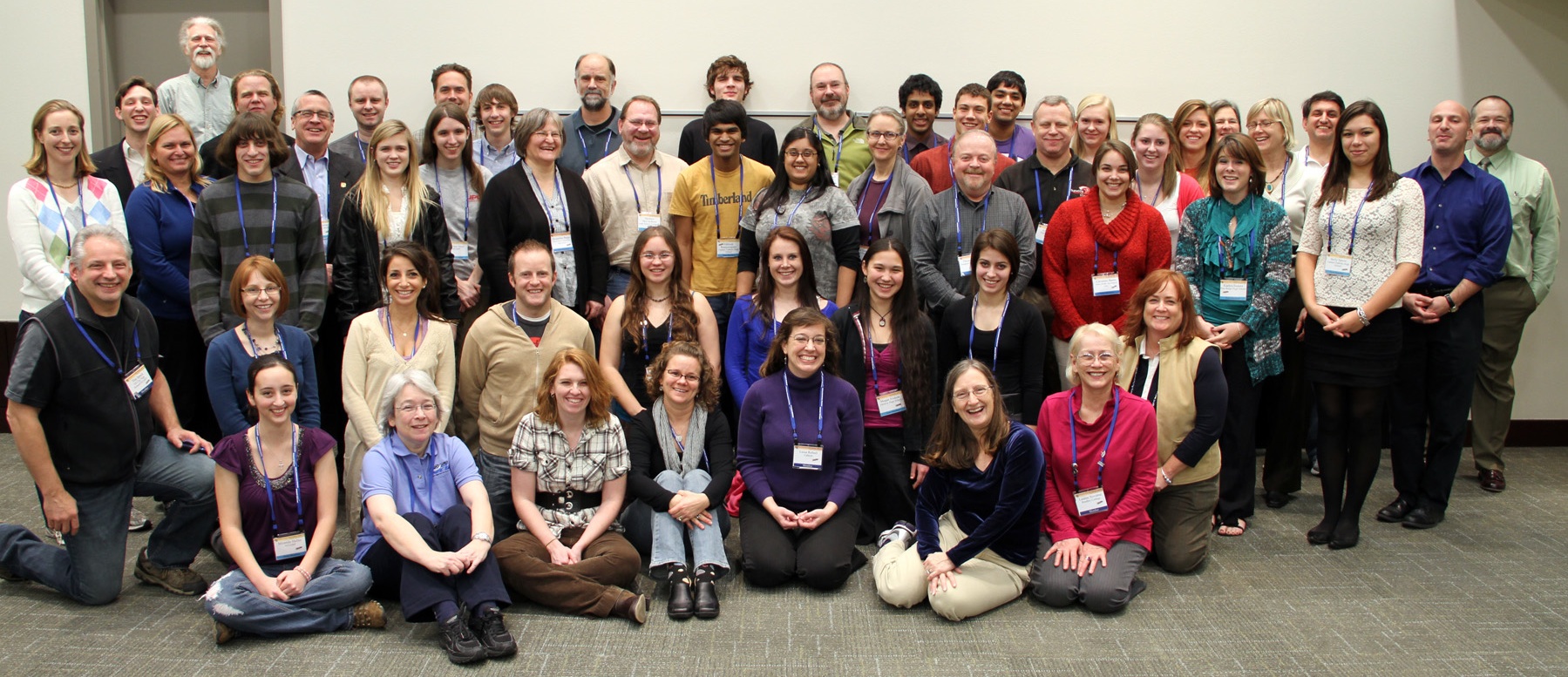
The 2011 and 2012 NITARP teams attended the 2012 January AAS meeting in Austin, TX. The 2011 class was presenting results and the 2012 class was starting up. We sent about 60 people to the AAS (the largest delegation to date) and had a grand time. Please see the special article on NITARP at the AAS. We also got a smattering of coverage in local media outlets.

Quotes

  • [student:] Attending the AAS meeting was one of the greatest things I have ever done. The information that I picked up from the meeting was immense and I would do further astronomical research so that I may attend this conference again.
  • What surprised me the most was the great sense of pride I felt when I listened to my students work with the other students in the BRC team. They completed each other's sentences. They interceded when others faltered. Wow. What a fabulously cooperative group.
  • After two days of being totally overwhelmed by all the high level science going on around me, it was a relief and simply awesome to see that these professional astronomers were also somewhat clueless about my own research. This was such an amazing capstone to the NITARP experience, actually feeling I was on nearly the same level as everyone else presenting.
  • The invited talk especially made me think a little harder about the assumptions we make when we describe our very own galaxy - we have not seen it! This comes up in class every year, and this talk gave me a better perspective when dealing with misconceptions students may have.
  • This year was great! I really felt comfortable making my way around to discuss not only what I teach, but also what my research was about.

AAS - 2012