


Chelen Johnson
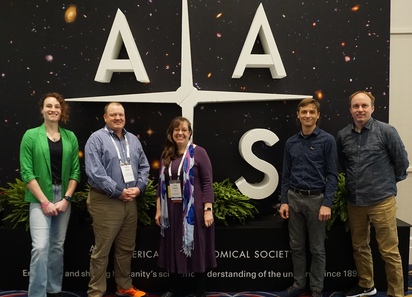
Investigtating Moving-group Photometry and Understanding Lightcurve Structures (IMPULS) will be studying rotation rates of stars in the young nearby Beta Pic Moving Group.

I'm also here with other educators, rubbing shoulders with them, seeing how they teach things, how they frame things, like what their mindset is. I keep opening my syllabus for the fall and adding things to it based on whatever we talked about here.

[Because of a poster I saw at the AAS and] my participation in the NITARP program, I will be raising the standards for my students in the future.

In summary, this [AAS meeting] was amazing. For four straight days, if I'd thrown a rock I would have hit a scientist. Priceless.


