


Chelen Johnson
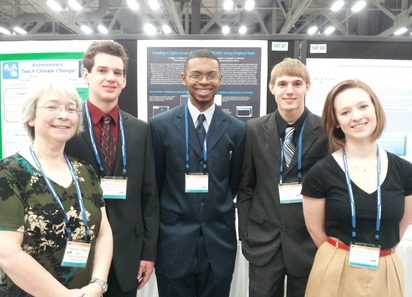
This virtual team collects all independent research presented in 2012, and done by NITARP or Spitzer alumni with students outside of a formal NITARP team. Two different teams presented posters in 2012.

This experience has made me conscious of how important it is to have students work with real data. I will definitely seek out more opportunities to include real data in my lessons and labs.

Seeing and hearing about scientists at work, on different projects, brought to life the reality of scientists doing scientific work.

I’ve already made big changes to my curriculum because of this program, and will continue to do so in future years.


