


Chelen Johnson
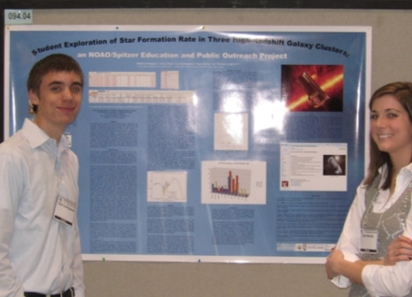
Being able to be physically present at Caltech and the AAS expanded the impact of this program significantly. It was in these settings, in particular, where one could see how the scientific enterprise typically works and how ideas are often shared.
I think this [AAS] trip is a crucial part of the program. I learned so much about the many different telescopes, enjoyed the historical presentations, and found the exposure to the more specific research to be beneficial, even if I didn't understand that much about the research itself. It was also a great chance to meet scientists as well as other educators.
I’ve always thought that probably most astronomers were just normal people who had a passion for astronomy, and my experience confirmed that. I felt like many of the astronomers I talked to were able to have normal conversations as well as “wow” me with lots of data and analysis.


