• NASA
  • IPAC

AAS - 2013

The Winter American Astronomical Society (AAS) meeting is the largest meeting of professional astronomers in the world. NITARP educators attend an AAS first to meet their team, then they go home and work remotely for much of the year, and then attend an AAS to present their results.  At any given AAS, then, we could have two NITARP classes attending - those finishing up, and those getting started. Reload to see a different set of quotes.

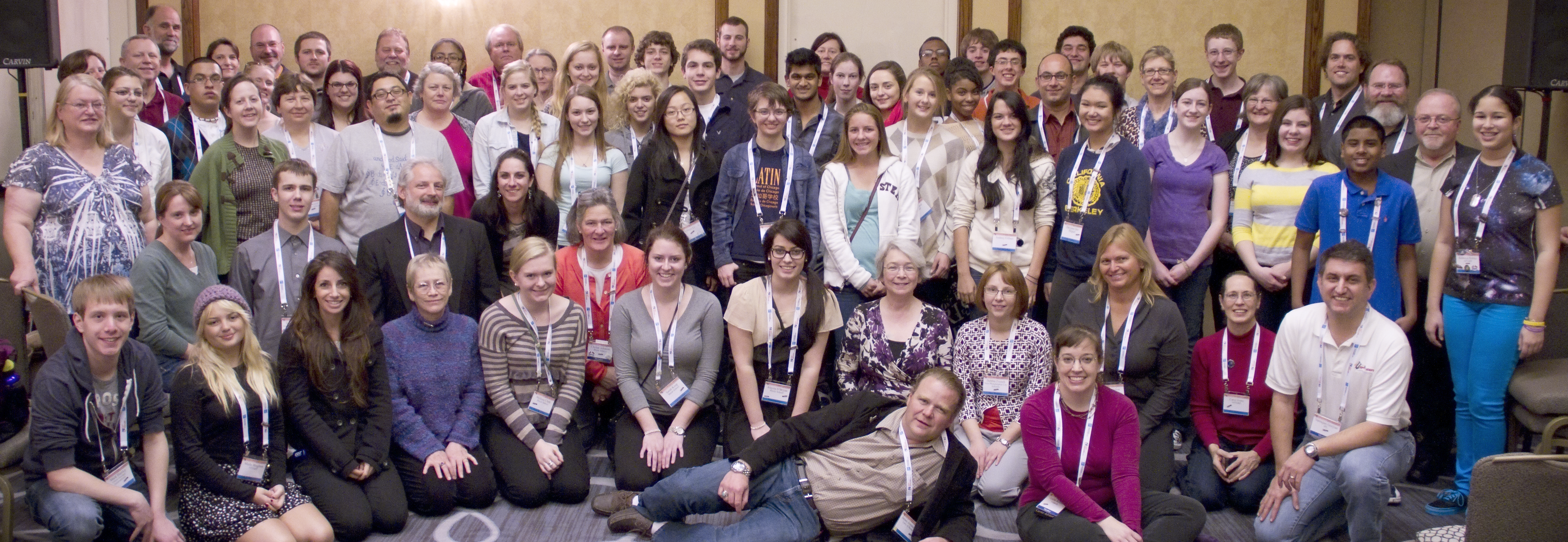
We were out in force at the AAS 2013 meeting in Long Beach, CA! A record number of NITARP-affiliated people attended, including the 2012 class finishing up and the 2013 class getting going. The 80 or so NITARP-affiliated folks made up about 3% of the AAS attendees.

Special article on AAS attendees!  And don't miss Danielle Miller's blog!

Quotes

  • I didn't anticipate how nice everyone was going to be to us as high school students at the conference -- everybody who stopped by was very encouraging and seemed impressed by the fact that we were there, let alone making a decent presentation.
  • The most interesting thing that I discovered was that there are so many different ways to become involved with astronomy. You can basically be any other type of scientist and become involved at some level with astronomy. This discovery changed for me the belief that astronomy, and even sciences in general, are fairly separate from each other. I had though the cross connections with astronomy happened but were not the norm; I see now that they are involved in nearly every major project.
  • I rarely get out among other teachers in the same field as I am, with similar interest and motivations, and even less often do I have time to be in the company of professional scientists to see and hear what they are doing, how it is being done, what technologies are being used, etc. Without this type of program to get me to a meeting like the AAS I would never be able to put all of this together.
  • There are many ways to get into the field of astronomy and astronomical research. Just being in the exhibition hall itself opened my mind to all the different possibilities with respect to astronomy: there were telescopes and researchers and publishers and educators and new technologies being exhibited--it really changed what I thought about "astronomers."
  • Astronomers, all of whom are scientists, can be personal, funny, and outright social beings. The nature of their work -- retracing their steps for accuracy, being critical of fellow colleagues, and looking to develop the next best project that has not been accomplished already -- requires astronomers to discuss, inquire, and exchange their ideas with one another.

AAS - 2013